
PsychWriterPro
Free Trial

PAI report writing, without the busywork

Enter your Personality Assessment Inventory scores once. PsychWriterPro classifies them, builds the score tables and helps you write the interpretation, then exports a finished report to Word or PDF.

Start Free TrialView Sample Reports

14-day free trial · Cancel anytime

Entered for 500+ patients by PsychWriterPro customers
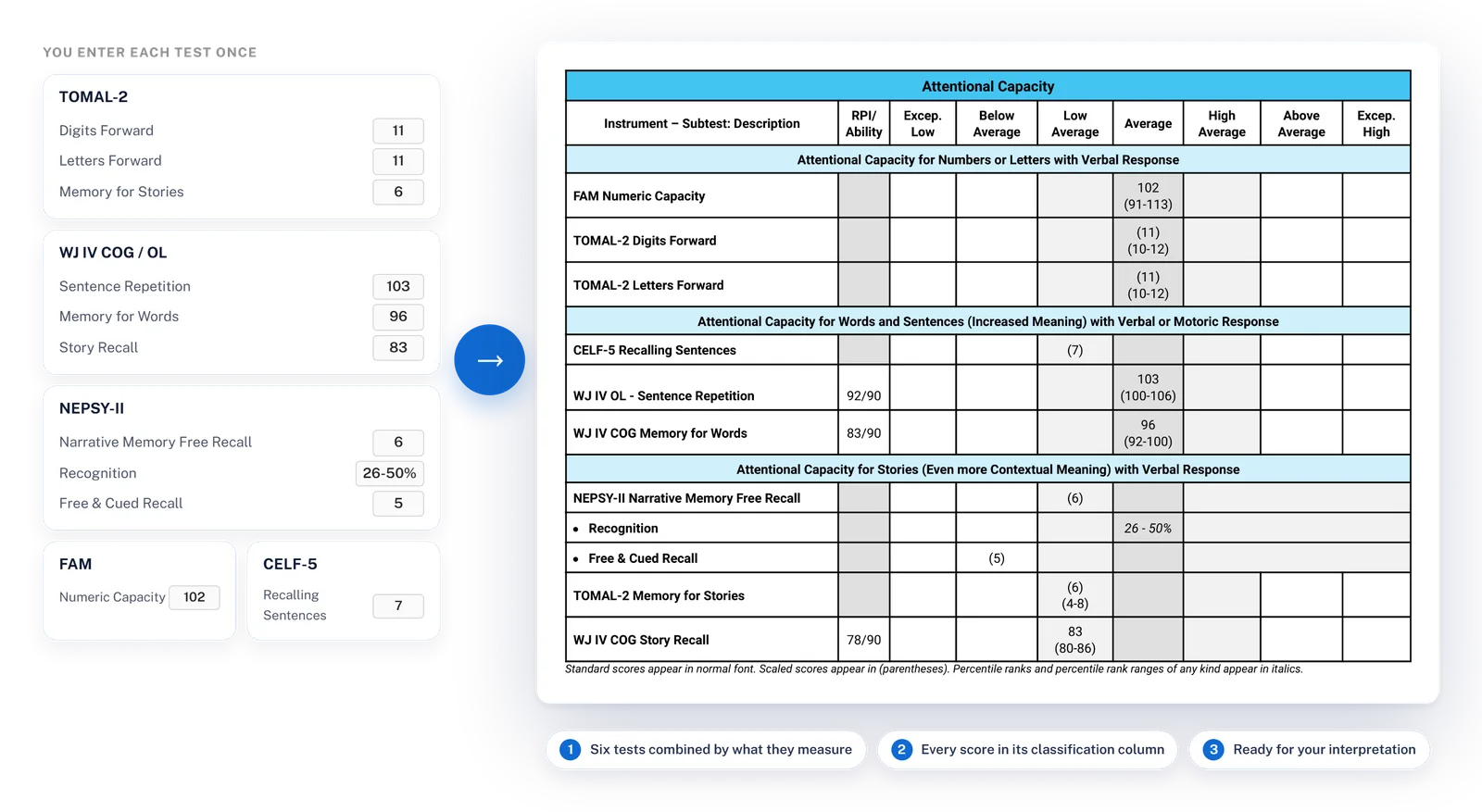
Scores from several tests, including the PAI, combined into one classified report table

PAI

What PsychWriterPro does with PAI scores

Provides information relevant for clinical diagnosis, treatment planning and screening for psychopathology in ages 18 years and older.

Every score classified

Each PAI score gets its classification as you enter it, with no manual lookup.

Entry that checks your work

The PAI entry screen adapts to the form and age you pick, and impossible values are caught before they reach a report.

Placed in the right domain

PAI results land in the report tables for what they measure, alongside the other tests you gave.

Report coverage

Where PAI scores appear in your report

PsychWriterPro places 130 PAI scores into 2 report tables across 2 clinical domains.

PAI scores in report tables
130
report tables
2
clinical domains
2

Social-Emotional Functioning and Adaptive Behaviors

1 table · 116 scores

Personality Assessment Inventory (PAI)

  • Language
  • Form
  • Normative Comparison Group
  • Somatic Complaints Items that reflect concerns about physical functioning and health matters.
  • Conversion Symptoms associated with conversion disorder, particularly sensory or motor dysfunctions.
  • Somatization Common physical symptoms and vague complaints of ill health and fatigue.
  • Health Concerns Preoccupation with health status and physical problems.
  • Anxiety Observable sign of anxiety with an emphasis on assessment across different response modalities.
  • Cognitive Ruminative worry and concern about current issues that result in impaired concentration and attention.
  • Affective Experience of tension, difficulty in relaxing, and the presence of fatigue as a result of high-perceived stress.
  • Physiological Overt physical signs of tension and stress.
  • Anxiety-Related Disorders Symptoms and behaviors related to specific anxiety disorders, particularly phobias, traumatic stress, and obsessive-compulsive symptoms.
  • Obsessive-Compulsive Intrusive thoughts or behaviors, rigidity, indecision, perfectionism, and affective contraction.
  • Phobias Common phobic fears, such as social situations, public transportation, heights, enclosed spaces, or other specific objects.
  • Traumatic Stress Experience of traumatic events that cause continuing distress and that are experienced as having left the adolescent changed or damaged in some fundamental way.
  • Depression Symptoms and phenomenology of depressive disorders.
  • Cognitive Thoughts of worthlessness, hopelessness, and personal failure, as well as indecisiveness and difficulties in concentration.
  • Affective Feeling of sadness, loss of interest in normal activities, and anhedonia.
  • Physiological Focuses on levels of physical functioning, activity, and energy, including disturbances in sleep pattern and changes in appetite or weight loss.
  • Mania Affective, cognitive, and behavioral symptoms of mania and hypomania.
  • Activity Level Overinvolvement in a wide variety of activities in a somewhat disorganized manner and the experience of accelerated thought processes and behavior.
  • Grandiosity Inflated self-esteem, expansiveness, and the belief that one has special and unique skills or talents.
  • Irritability Presence of strained relationships due to the adolescent’s frustration with the inability or unwillingness of others to keep up with his or her plans, demands, and possibly unrealistic ideas.
  • Paranoia Symptoms of paranoid disorders and more enduring characteristics of paranoid personality.
  • Hypervigilance Suspiciousness and the tendency to monitor the environment for real or imagined slights by others.
  • Persecution Focuses on the belief that one has been treated inequitably and that there is a concerted effort among others to undermine one’s interests.
  • Resentment Bitterness and cynicism in interpersonal relationships, and a tendency to hold grudges and externalize blame for any misfortunes.
  • Schizophrenia Symptoms relevant to the broad spectrum of schizophrenia disorders.
  • Psychotic Experiences Experience unusual perceptions and sensations, magical thinking, and/or other unusual ideas that may involve delusional beliefs.
  • Social Detachment Focuses on social isolation, and discomfort and awkwardness in social situations.
  • Thought Disorder Confusion, concentration problems, and disorganization of thought processes.
  • Borderline Features Attributes indicative of a borderline level of personality functioning, including unstable and fluctuating interpersonal relations, impulsivity, affective lability and instability, and uncontrolled anger.
  • Affective Instability Emotional responsiveness, rapid mood changes, and poor emotional control.
  • Identity Problems Emotional responsiveness, rapid mood changes, and poor emotional control.
  • Negative Relationships History of ambivalent, intense relationships in which one has felt exploited and betrayed.
  • Self-Harm Impulsivity in areas that have a high potential for negative consequences.
  • Antisocial Features History of illegal acts and authority problems, egocentrism, lack of empathy and loyalty, instability, and excitement-seeking.
  • Antisocial Behaviors History of antisocial acts and involvement in illegal activities.
  • Egocentricity Lack of empathy or remorse and a generally exploitive approach to interpersonal relationships.
  • Stimulus-Seeking Focuses on a craving for excitement and sensation, a low tolerance for boredom, and a tendency to be reckless and risk taking.
  • Alcohol Problems Problematic consequences of alcohol use and features of alcohol dependence.
  • Drug Problems Problematic consequences of drug use (i.e., prescription, illicit) and features of drug dependence.
  • Somatic Complaints Items that reflect concerns about physical functioning and health matters.
  • Anxiety Observable sign of anxiety with an emphasis on assessment across different response modalities.
  • Anxiety-Related Disorders Symptoms and behaviors related to specific anxiety disorders, particularly phobias, traumatic stress, and obsessive-compulsive symptoms.
  • Depression Symptoms and phenomenology of depressive disorders.
  • Mania Affective, cognitive, and behavioral symptoms of mania and hypomania.
  • Paranoia Symptoms of paranoid disorders and more enduring characteristics of paranoid personality.
  • Schizophrenia Symptoms relevant to the broad spectrum of schizophrenia disorders.
  • Borderline Features Attributes indicative of a borderline level of personality functioning, including unstable and fluctuating interpersonal relations, impulsivity, affective lability and instability, and uncontrolled anger.
  • Antisocial Features History of illegal acts and authority problems, egocentrism, lack of empathy and loyalty, instability, and excitement-seeking.
  • Alcohol Problems Problematic consequences of alcohol use and features of alcohol dependence.
  • Drug Problems Problematic consequences of drug use (i.e., prescription, illicit) and features of drug dependence.
  • Aggression Characteristics and attitudes related to anger, assertiveness, hostility, and aggression.
  • Aggressive Attitudes Hostility, poor control of anger expression, and a belief in the instrumental utility of aggression.
  • Verbal Aggression Verbal expressions of anger ranging from assertiveness to abusiveness, and a readiness to express anger to others.
  • Physical Aggression Tendency toward physical displays of anger, including damage to property, physical fights, and threats of violence.
  • Suicidal Ideation Ranging from hopelessness to thoughts and plans for the suicidal act.
  • Stress Impact of recent stressors on major life areas (e.g., school, home).
  • Nonsupport A perceived lack of social support .
  • Treatment Rejection Lack of perceived social support, considering both the level and the quality of available support.
  • Aggression Characteristics and attitudes related to anger, assertiveness, hostility, and aggression.
  • Suicidal Ideation Ranging from hopelessness to thoughts and plans for the suicidal act.
  • Nonsupport A perceived lack of social support .
  • Treatment Rejection Lack of perceived social support, considering both the level and the quality of available support.
  • Dominance Assesses the extent to which a person is controlling and independent in personal relationships. A bipolar dimension, with a dominant style at the high end and a submissive style at the low end.
  • Warmth Assesses the extent to which a person is interested in supportive and empathetic personal relationships. A bipolar dimension with a warm, outgoing style at the high end and a cold, rejecting style at the low end.
  • Suicide Potential Index Assessment of suicidality.
  • Violence Potential Index Assessment of dangerousness.
  • Treatment Process Index Estimate of the probability of a difficult treatment process.
  • Mean Clinical Elevation
  • Cluster 1 Profile suggests a person who is reporting some turmoil in their life that might be the source of some stress, but not to the point where prominent symptoms are observed.
  • Cluster 2 Profile suggests a person who is severely depressed and withdrawn.
  • Cluster 3 Individuals with this profile tend to currently have, or once had, a severe drinking problem and have experienced a number of physiological problems that may be partially related to their drinking.
  • Cluster 4 Profile suggests a person with a history of acting-out behavior, most notably in the area of substance abuse but probably involving other behaviors as well.
  • Cluster 5 Profile suggests an individual who is experiencing a more or less acute reaction to current stressors, with anxiety and moodiness being the most prominent complaints.
  • Cluster 6 Profile suggests a person who is somewhat socially isolated and experiencing some confusion and difficulties in thinking and concentration.
  • Cluster 7 Profile suggests an individual who is severely depressed, anxious, and agitated.
  • Cluster 8 Profile suggests an individual who is reporting marked concerns about his or her physical functioning.
  • Cluster 9 Profile suggests an individual who currently has, or has had, a severe drinking problem and has experienced a number of adverse consequences related to his or her drinking.
  • Cluster 10 Profile suggests an individual who is unhappy, angry, resentful, and confused. Suicidal ideation is prominent.
  • Adjustment Reaction
  • Alcoholic
  • All “False”
  • All “Mainly True”
  • All “Slightly True”
  • All “Very True”
  • Antipsychotic Medications
  • Antisocial Personality Disorder
  • Anxiety Disorder
  • Assault History
  • Auditory Hallucinations
  • Borderline Personality Disorder
  • Current Aggressors
  • Current Suicide
  • Drug Abuse
  • Dysthymic Disorder
  • Fake Bad
  • Fake Good
  • Mania
  • Major Depressive Disorder
  • Negative Impression Management (NIM) Predicted
  • Paranoid Delusions
  • Positive Impression Management (PIM) Predicted
  • Posttraumatic Stress Disorder
  • Prisoners
  • Random Responding
  • Rapists
  • Schizoaffective Disorder
  • Schizophrenia
  • Self-Mutilation
  • Somatoform Disorder
  • Spouse Abusers
  • Suicide History

Personality Assessment Inventory (PAI) - Validity

  • Inconsistency Scale
  • Infrequency
  • Negative Impression
  • Positive Impression
  • Infrequency
  • Negative Impression
  • Positive Impression
  • Malingering Index
  • Rogers Discriminant Function
  • Defensiveness Index
  • Cashel Discriminant Function
  • Alcohol Problems Estimate Score
  • Drug Problems Estimated Score
  • Missing Items

Included

Everything you need to write up the PAI

  • Scores validated as you enter them

  • Classifications filled in automatically

  • Ready-made score tables, organized by clinical domain

  • A Word-style editor under every table for your interpretation

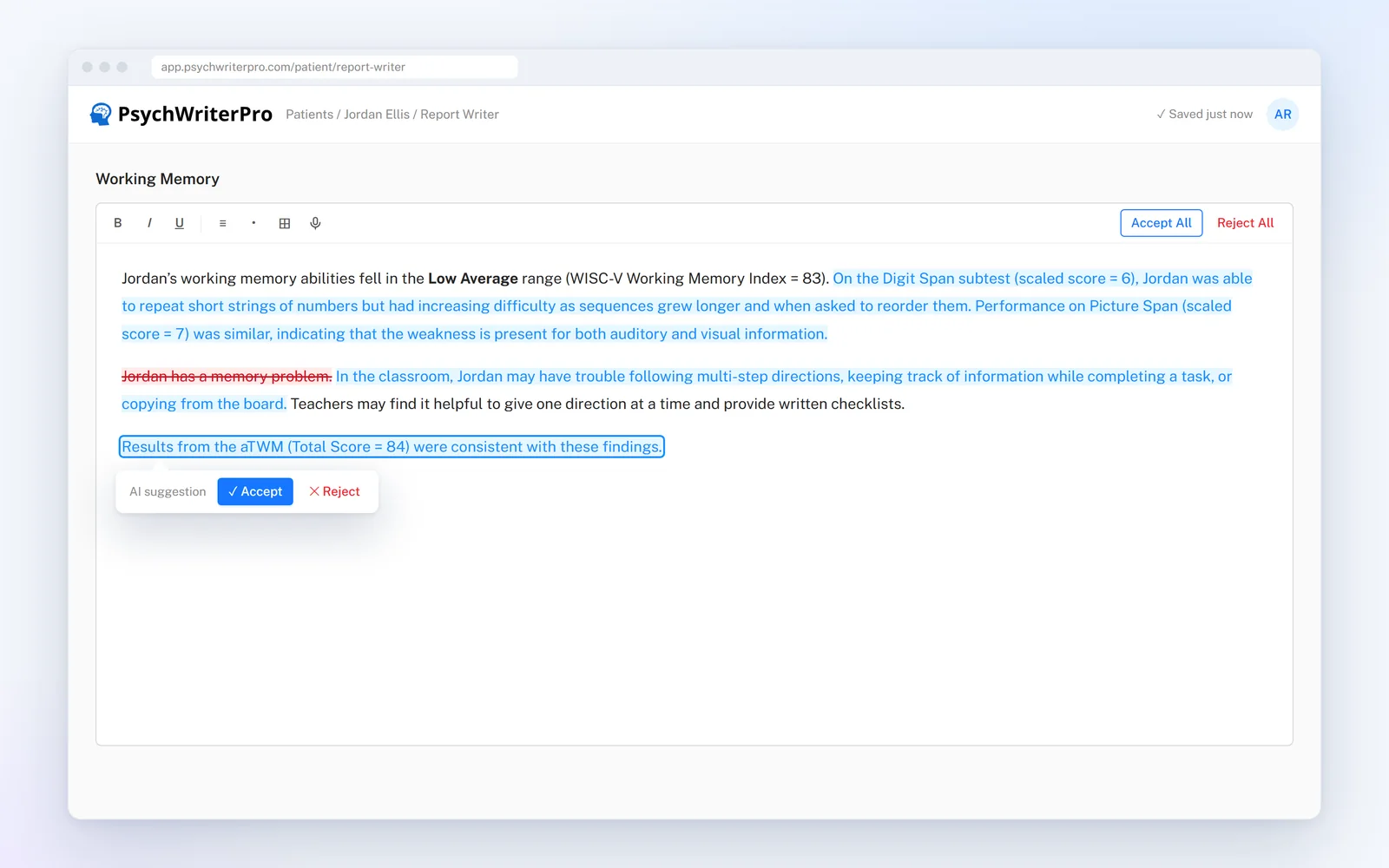
  • AI drafting from the scores, as tracked changes you accept or reject

  • One-click export to Word or PDF with your branding
See all features
An interpretation drafted from the scores, shown as tracked changes to accept or reject

Tests often reported with the PAI

All of these are supported, and their scores share the same report tables.

Wechsler Adult Intelligence Scale | Fifth Edition (WAIS-5)Wechsler Adult Intelligence Scale, Fourth Edition (WAIS-IV)Brown Executive Function/Attention Scales (BrownEFAScales)Conners Continuous Performance Test – Third Edition (CPT3)Wide Range Assessment of Memory and Learning, Third Edition (WRAML3)
See all 297 supported tests →

Questions

PAI and PsychWriterPro

Does PsychWriterPro support the PAI?

Yes. The Personality Assessment Inventory (PAI) is fully supported, with its own score entry screen, automatic classifications and report tables.

No. PsychWriterPro is a report writer, not a scoring service. You enter or import the scores from the publisher's scoring, and PsychWriterPro classifies them, lays out the tables and helps you write the report.

Yes. Reports are organized by clinical domain, so PAI subtests appear alongside subtests from the other tests you gave, in the table for what they measure. 297+ tests are supported.

You choose the layout: a full report, tables only, narratives only, or narratives with the tables in an appendix. Reports export to Word or PDF with your letterhead and colors. Sample reports are on the Sample Reports page.

Yes. There is a 14-day free trial, and a sample patient is set up for you on day one.

Write your next PAI report in PsychWriterPro

Try it free for 14 days, with a sample patient set up for you on day one.

Start Free TrialBook a Demo Call

PAI is a trademark of its publisher, PAR. PsychWriterPro is an independent product and is not affiliated with or endorsed by PAR.